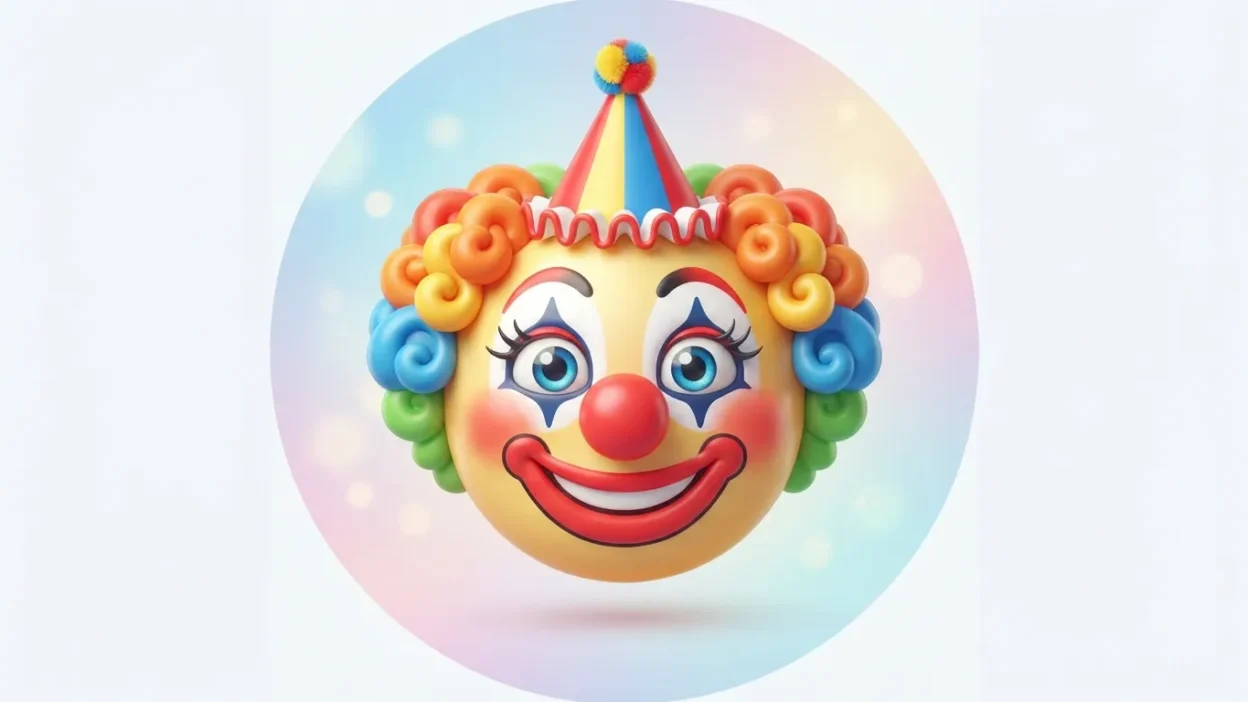
The clown emoji can turn an ordinary message into a joke, roast, or playful reaction in seconds.
The clown emoji 🤡 is one of those symbols that can completely change the tone of a message. You might send it after making a silly mistake, reacting to someone’s bad decision, or joking about yourself.
Its meaning depends heavily on context, platform, and the relationship between people.
From WhatsApp emojis to Instagram comments and TikTok captions, 🤡 is often used for humor, irony, embarrassment, and playful self-mockery.
Understanding these emoji meanings helps you communicate the exact feeling you want without writing a long explanation.
Sometimes one little 🤡 says, “I really played myself.”
What do clown emoji mean?
The clown emoji 🤡 commonly adds humor, silliness, irony, or self-mockery. For example, someone might write, “I trusted him again 🤡” to make fun of their own decision.
The surrounding emojis can change the emotional tone. 😂 can make the message feel more openly funny, while 😭 can create exaggerated dramatic humor. 🙃 can make the same idea feel awkward or sarcastic.
🎭 can work well when discussing acting, pretending, or putting on a performance, while 🎪 connects naturally with circus-related jokes and playful clown references.
| Emoji | Core meaning | Misread as | Best used when |
| 🤡 | Clowning, foolishness, irony | Insult | Self-roasting or joking |
| 😂 | Strong laughter | Genuine laughter only | Funny reactions |
| 😭 | Dramatic emotion | Real sadness | Exaggerated reactions |
| 🙃 | Awkward irony | Confusion | Sarcasm or awkward moments |
| 😅 | Nervous humor | Embarrassment | Small mistakes |
| 😈 | Mischievous humor | Serious evil | Playful teasing |
| 💀 | Extreme reaction | Literal death | “I can’t believe this” moments |
| 👀 | Interest or suspicion | Staring | Curiosity or teasing |
| 🎭 | Performance or pretending | Theater only | Acting or fake situations |
| 🎪 | Circus or clown theme | Random decoration | Circus jokes and clown references |
🤡 Clown Face
Meaning: Playful foolishness, self-mockery, irony, or joking about a ridiculous situation.
Example 1: I really thought that was a good idea 🤡
Example 2: Me making the same mistake again 🤡
😂 Face with Tears of Joy
Meaning: Strong laughter or amusement in a funny situation.
Example 1: That video was too funny 😂
Example 2: You actually said that 😂
😭 Loudly Crying Face
Meaning: An exaggerated emotional reaction that can also be humorous online.
Example 1: I can’t believe you did that 😭
Example 2: This is too much 😭
🙃 Upside-Down Face
Meaning: Awkwardness, irony, or a situation that feels absurd.
Example 1: Everything is going perfectly 🙃
Example 2: Another problem today 🙃
😅 Grinning Face with Sweat
Meaning: Nervous amusement or relief after an awkward moment.
Example 1: That was close 😅
Example 2: I almost forgot again 😅
😈 Smiling Face with Horns
Meaning: Playful mischief or a cheeky attitude.
Example 1: I have an idea 😈
Example 2: Don’t blame me 😈
💀 Skull
Meaning: An exaggerated reaction to something extremely funny, shocking, or unbelievable.
Example 1: That comment finished me 💀
Example 2: I cannot stop laughing 💀
👀 Eyes
Meaning: Attention, curiosity, suspicion, or interest in what is happening.
Example 1: Wait, what happened? 👀
Example 2: I’m listening 👀
🎭 Performing Arts
Meaning: A visual reference to acting, performance, or pretending.
Example 1: We’re putting on a show 🎭
Example 2: That reaction deserves an award 🎭
🎪 Circus Tent
Meaning: A playful connection to circus themes, entertainment, and clown-related humor.
Example 1: Welcome to the circus 🎪
Example 2: This group chat is a circus 🎪
How to use clown emoji the right way
On WhatsApp, 🤡 works especially well in personal conversations. It can make self-deprecating jokes, playful teasing, and embarrassing stories feel lighter.
On Instagram, the same symbol is often used in comments, captions, memes, and reaction posts. It can fit a humorous aesthetic or help a short comment communicate sarcasm without a full sentence.
On TikTok, 🤡 frequently appears in humorous captions and reactions where irony is important. Creators may use it when a situation has an unexpected ending or when someone knowingly makes a ridiculous choice.
A simple rule is to consider the relationship first. With close friends, playful teasing is usually easier to understand. With strangers, however, 🤡 can sound insulting if the surrounding message does not clearly show that you are joking.
Do: Use it for obvious jokes, self-roasting, playful reactions, and humorous situations.
Don’t: Add it to serious conversations where the other person may interpret it as disrespect.
Best clown emoji combos copy & paste
Romantic
👉 🤡❤️ For joking about your own romantic behavior.
👉 ❤️🤡 For a playful romantic self-roast.
👉 😂🤡❤️ When romance becomes unexpectedly funny.
Cute
👉 🤡😂 For a silly moment between friends.
👉 😅🤡 For an adorable but embarrassing mistake.
👉 🙃🤡 For a harmless awkward situation.
Flirty
👉 😈🤡 For playful, mischievous teasing.
👉 👀🤡 For pretending to notice something interesting.
👉 😂😈🤡 For a cheeky joke with a playful edge.
Missing someone
👉 😭🤡 For dramatically joking about missing someone.
👉 👀😭🤡 For checking on someone while exaggerating the emotion.
Good night
👉 😂🤡🌙 For ending the day after a funny conversation.
👉 😅🤡🌙 For a playful good-night reaction.
👉 😈🤡🌙 For a mischievous final message.
👉 🙃🤡🌙 For an ironic “what a day” ending.
Trending clown emoji in 2026
In 2026, 🤡 continues to fit the broader internet style of exaggerated reactions, self-aware humor, and ironic commentary. It works particularly well when people want to laugh at their own choices rather than make a serious statement.
😂 is commonly paired with humorous reactions, while 😭 and 💀 suit exaggerated online responses. 👀 also fits short reaction-based conversations where the user wants to show curiosity without explaining much.
These combinations are especially useful for younger social-media audiences and content creators who rely on short, visual reactions. They can appear naturally in TikTok comments, Instagram posts, memes, and private chats.
| Emoji | Why trending | Who uses it | Platform |
| 🤡 | Self-aware humor and irony | Social-media users | TikTok, Instagram, WhatsApp |
| 😂 | Quick humorous reaction | General audiences | Instagram, WhatsApp |
| 😭 | Dramatic online reactions | Younger users and creators | TikTok, Instagram |
| 💀 | Exaggerated reaction humor | Meme and social-media users | TikTok, Instagram |
Emoji culture keeps changing as online communities create new combinations and give familiar symbols fresh conversational uses.
FAQs:
1. What is the most popular clown emoji?
The main clown emoji is 🤡, and it is widely recognized as a humorous reaction. Its exact tone depends on the message surrounding it.
2. What does 🤡 mean from a girl or boy?
The emoji does not have a fixed meaning based on gender. A girl or boy may use 🤡 for humor, self-roasting, teasing, embarrassment, or irony.
3. Why do emojis look different on iPhone vs Android?
Different operating systems use their own emoji designs and artwork. The basic Unicode meaning is shared, but the visual appearance can vary between devices.
4. Are clown emojis used differently in other countries?
Yes, context can vary between cultures and online communities. The same symbol may feel playful in one conversation but more insulting or sarcastic in another.
Conclusion:
The clown emoji is most powerful when the surrounding words make your intention clear.
Use it naturally to add humor, irony, and personality without overcomplicating your message.
Whether you’re chatting privately or posting online, the right combination can make your reaction instantly understandable.

I am C.S. Lewis, a British writer, scholar, and Christian thinker best known for The Chronicles of Narnia and his influential works on Christian faith.
My writing continues to inspire readers around the world through timeless stories, faith, and thoughtful ideas.
For more author information and inspiring names, visit Elitenamez.com.