Sometimes one look says more than a whole sentenceand the side eye emoji does exactly that.
Have you ever received a message that made you think, “Seriously?” Instead of typing a long reply, you can simply send the side eye emoji 🙄. It can add sarcasm, disbelief, annoyance, or playful judgment in seconds.
In chats, comments, and captions, it often gives plain words a stronger emotional tone. Understanding its context helps you avoid sounding rude when you only meant to be funny.
Let’s explore its emoji meanings, everyday uses, copy paste emojis, and popular combinations.
The side eye emoji is the perfect digital look when words are not quite enough.
What do side eye emoji mean?
The side eye emoji 🙄 is commonly used to show annoyance, disbelief, sarcasm, or an “I cannot believe this” reaction. Its meaning can shift depending on the message around it.
The same family can express different moods, from quiet doubt to playful teasing. Here are 10 useful emojis that often work in side-eye conversations.
| Emoji | Core meaning | Misread as | Best used when |
| 🙄 | Annoyance or disbelief | Serious anger | Someone says something ridiculous |
| 😒 | Displeasure | Deep sadness | You are unimpressed |
| 😑 | Deadpan reaction | Coldness | You have no words |
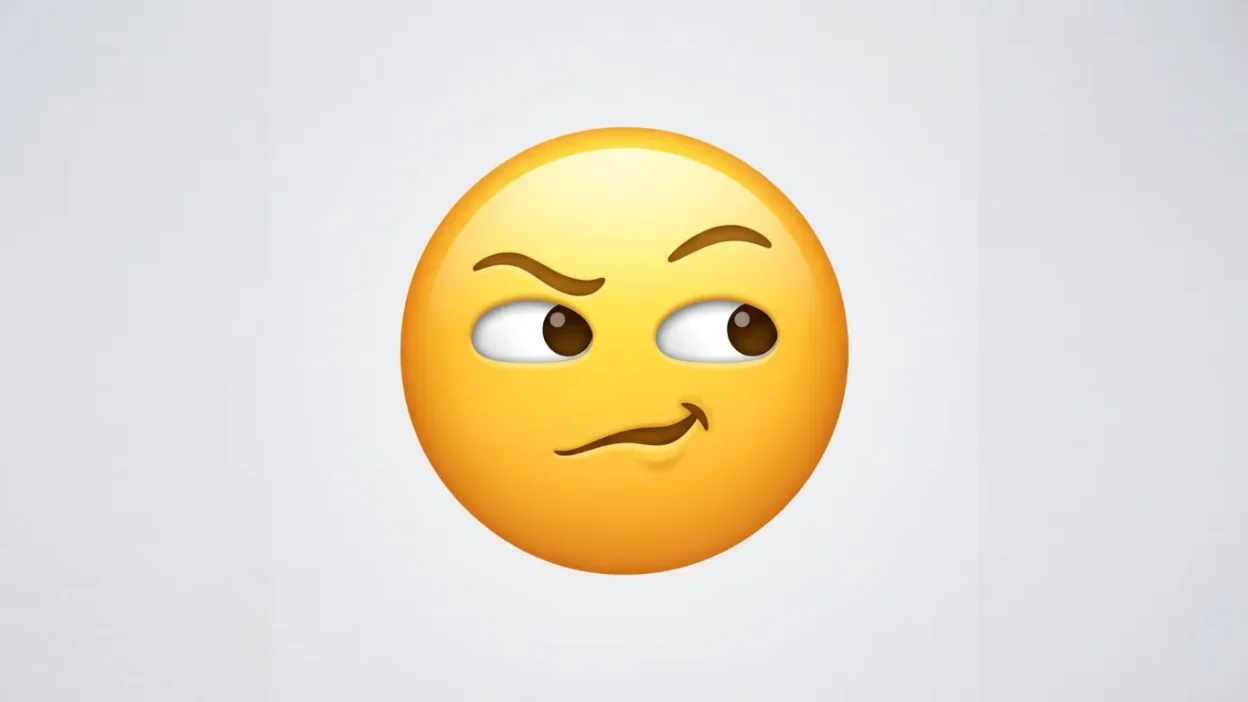
| 😏 | Smug or teasing tone | Arrogance | A playful confident reply fits |
| 🤨 | Doubt or suspicion | Confusion | You question what someone said |
| 😬 | Awkward tension | Fear | A situation feels uncomfortable |
| 🫤 | Mixed or uncertain feeling | Sadness | You feel unsure about something |
| 😐 | Neutral reaction | Boredom | You want a restrained response |
| 👀 | Attention or curiosity | Shock | Something catches your interest |
| 😌 | Calm satisfaction | Sleepiness | You want a relaxed response |
Side Eye Emoji Cards
🙄 Rolling Eyes
Meaning: Annoyance, disbelief, or sarcastic frustration.
Example 1: You really forgot again 🙄
Example 2: Sure, that sounds believable 🙄
😒 Unamused Face
Meaning: A displeased or unimpressed reaction.
Example 1: That was your excuse? 😒
Example 2: I am not impressed 😒
😑 Expressionless Face
Meaning: A flat, speechless, or deadpan reaction.
Example 1: I honestly have nothing to say 😑
Example 2: Well, that happened 😑
😏 Smirking Face
Meaning: A confident, knowing, or teasing expression.
Example 1: I knew you would say that 😏
Example 2: You thought I would not notice? 😏
🤨 Face With Raised Eyebrow
Meaning: Doubt, questioning, or suspicion.
Example 1: Are you sure about that? 🤨
Example 2: That story sounds interesting 🤨
😬 Grimacing Face
Meaning: Awkwardness, tension, or an uncomfortable reaction.
Example 1: That conversation got awkward 😬
Example 2: I probably should not have said that 😬
🫤 Face With Diagonal Mouth
Meaning: Uncertainty, hesitation, or an uneasy feeling.
Example 1: I am not sure about this 🫤
Example 2: That seems a little strange 🫤
😐 Neutral Face
Meaning: A restrained, emotionless, or controlled response.
Example 1: Okay, then 😐
Example 2: I will just stay quiet 😐
👀 Eyes
Meaning: Attention, curiosity, or watching something closely.
Example 1: Wait, what happened? 👀
Example 2: Now I want to know everything 👀
😌 Relieved Face
Meaning: A peaceful, relaxed, or satisfied reaction.
Example 1: Finally, everything is sorted 😌
Example 2: That worked out nicely 😌
How to use side eye emoji the right way
On WhatsApp, side-eye expressions work especially well in personal chats. They can make teasing, disbelief, and playful reactions feel more expressive without requiring a long explanation.
On Instagram, these expressions often appear in captions, comments, Stories, and reaction posts. They can add personality to short text while fitting casual and aesthetic communication styles.
On TikTok, the same emojis often support humor, irony, relatable moments, and reaction-based content. Creators may pair them with short captions to make a joke feel more obvious.
Do: Match the emoji with the mood of your message.
Do: Use it with close friends when teasing.
Don’t: Assume everyone will read sarcasm the same way.
Don’t: Use a strong reaction when a professional tone is needed.
Best side eye emoji combos copy & paste
Romantic
👉 🙄❤️ Playfully annoyed with someone you love.
👉 😏❤️ Confident, teasing affection.
👉 👀❤️ Showing interested attention toward someone special.
Cute
👉 😬🙄 Cute awkward reaction to something silly.
👉 😌❤️ A soft, affectionate response.
👉 👀😌 Quiet curiosity with a relaxed mood.
Flirty
👉 😏👀 A playful, knowing look.
👉 🤨😏 Questioning someone with a teasing edge.
👉 👀😏 Showing interest without saying much.
Missing Someone
👉 🙄❤️ Playfully complaining that you miss them.
👉 👀❤️ Hinting that you are thinking about someone.
👉 😌❤️ A calm, affectionate feeling.
Good Night
👉 😑😌 A simple, tired-feeling sign-off.
👉 👀😌 A relaxed final check before sleep.
👉 😏😌 A playful good-night mood.
Trending side eye emoji in 2026
In 2026, side-eye expressions continue to fit the casual, reaction-heavy style common across social platforms. They are especially useful when people want to communicate irony or attitude without writing a full explanation.
🙄 remains recognizable in everyday conversations, while 🤨 works naturally in reaction posts and comments. 👀 is also frequently useful when a conversation invites curiosity, while 😏 fits playful captions and teasing exchanges.
| Emoji | Why trending | Who uses it | Platform |
| 🙄 | Strong reaction for sarcasm | Everyday chat users | WhatsApp, TikTok |
| 🤨 | Works well with questioning humor | Commenters, creators | TikTok, Instagram |
| 👀 | Short and attention-grabbing | Social media users | Instagram, TikTok |
| 😏 | Fits playful and teasing content | Friends, creators | Instagram, WhatsApp |
As communication changes, emoji use generally keeps adapting to new humor, online conversations, and visual styles.
FAQs:
1. What is the most popular side eye emoji?
🙄 is the most recognizable choice when someone wants to express a classic side-eye reaction. It works especially well for sarcasm, disbelief, and playful annoyance.
2. What does 🙄 mean from a girl or boy?
The basic interpretation does not depend on gender. Context matters more, so 🙄 may signal teasing, frustration, or disbelief depending on the conversation.
3. Why do emojis look different on iPhone vs Android?
Emoji designs are created by each platform or operating system, so the artwork can vary. The intended Unicode character stays the same even when its visual appearance changes.
4. Are side eye emoji used differently in other countries?
Yes, context and online culture can influence how people interpret emojis. Sarcasm may feel playful in one conversation but more negative in another, so surrounding words matter.
Conclusion:
The side eye emoji can turn a simple message into something more expressive and memorable.
Use it naturally, consider your audience, and let the surrounding words provide the context.
Whether you are chatting on WhatsApp, commenting on Instagram, or reacting on TikTok, the right expression can make your message feel much more human.

I am C.S. Lewis, a British writer, scholar, and Christian thinker best known for The Chronicles of Narnia and his influential works on Christian faith.
My writing continues to inspire readers around the world through timeless stories, faith, and thoughtful ideas.
For more author information and inspiring names, visit Elitenamez.com.