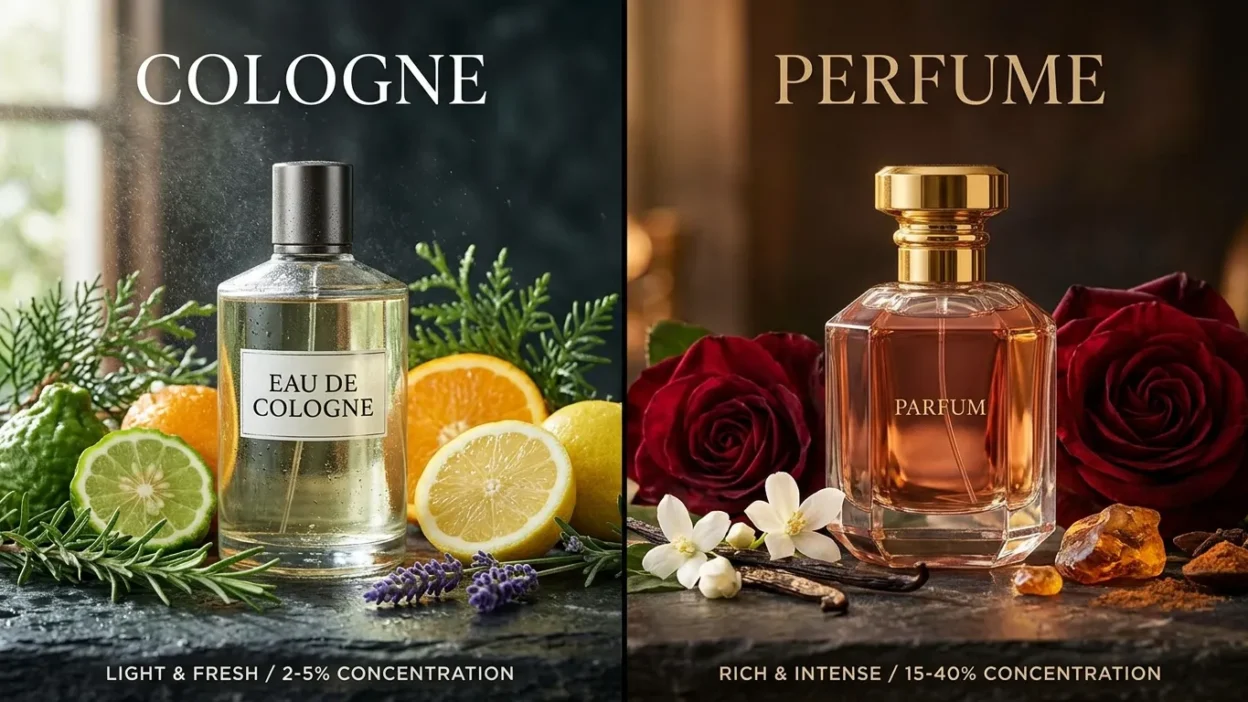
The main difference between cologne and perfume is usually fragrance concentration.
True eau de cologne is a light fragrance with a relatively low concentration of aromatic materials, while parfum has a much higher concentration.
However, in everyday American English, “cologne” is also commonly used to mean almost any men’s fragrance.
Key Takeaways
- True eau de cologne is lighter and generally wears for less time than parfum.
- Parfum has a higher fragrance concentration, which usually supports longer wear.
- “Cologne” does not technically mean men’s fragrance only.
- Eau de toilette and eau de parfum sit between traditional cologne and parfum.
- There is no universally “best” option. Your skin, formula, weather, occasion, and personal taste all matter.
What Is the Difference Between Cologne and Perfume?
If you have ever stood in front of a fragrance counter wondering whether to buy cologne or perfume, the labels can be confusing.
The simplest answer is concentration. Fragrances contain aromatic materials diluted in a carrier, commonly alcohol and water. Different fragrance categories generally use different levels of aromatic material.
Traditional eau de cologne (EDC) is relatively light. Parfum, sometimes called extrait de parfum, is much more concentrated. Between them are familiar labels such as eau de toilette (EDT) and eau de parfum (EDP).
But there is an important catch.
Why “Cologne” Can Be Confusing
In the United States, people often use “cologne” as a casual word for a fragrance marketed toward men. That does not necessarily mean the bottle contains technically defined eau de cologne.
For example, someone may say, “What cologne are you wearing?” even when the bottle is labeled Eau de Parfum.
So when comparing cologne vs perfume, always check the actual label. “Cologne” can describe a technical fragrance concentration or simply be everyday language for a men’s fragrance.
Cologne vs Perfume: Side-by-Side Comparison
| Feature | Cologne | Perfume |
|---|---|---|
| Technical meaning | Usually eau de cologne | Usually parfum/extrait |
| Fragrance concentration | Lower | Higher |
| Overall feel | Light and fresh | Richer and fuller |
| Typical longevity | Shorter | Longer |
| Reapplication | More likely | Less often needed |
| Best suited to | Casual, daytime wear | Long wear, evenings, special occasions |
| Gender | Not inherently male | Not inherently female |
| Price | Often lower | Often higher |
These are general patterns, not guarantees. A fragrance’s formula, ingredients, application, skin chemistry, and environment can all change how it performs. Concentration is useful for understanding a fragrance, but it does not tell the whole story.
Understanding Fragrance Concentration
The easiest way to understand fragrance labels is to think of them as a rough spectrum from lighter to more concentrated.
Eau de Cologne
Eau de Cologne, or EDC, is traditionally one of the lighter fragrance categories. DermNet lists a typical concentration of about 2–4%, while other fragrance references give somewhat broader ranges.
It is often associated with fresh, bright fragrances and may need to be reapplied during the day.
This makes it useful when you want something subtle rather than a scent that stays noticeable for many hours.
Eau de Toilette
Eau de Toilette (EDT) generally contains more aromatic material than traditional eau de cologne. A commonly cited range is around 5–15%, although exact formulas vary.
EDT is extremely common because it can provide a balance between freshness and staying power.
If you want something that feels lighter than a rich parfum but lasts longer than a traditional cologne, EDT can be a practical middle ground.
Eau de Parfum
Eau de Parfum (EDP) generally has a higher concentration than EDT. DermNet gives a typical range of 15–20%.
EDP is popular for everyday wear because it can provide noticeable longevity without necessarily feeling as heavy as a parfum.
It can work well for office wear, dinners, dates, and day-to-night use, depending on the specific fragrance.
Parfum or Extrait
Parfum, also called extrait, generally sits at the more concentrated end of the traditional fragrance spectrum. DermNet gives a typical range of 20–30%.
Because it contains more fragrance material, parfum is often richer and designed to be applied more sparingly.
However, more concentration does not automatically mean “better.” A lighter fragrance may be exactly what you want on a warm afternoon.
Does Perfume Last Longer Than Cologne?
Usually, yes.
A higher concentration often contributes to longer wear, which is why parfum generally lasts longer than traditional eau de cologne. DermNet describes eau de cologne as dissipating relatively quickly, while parfum can remain noticeable for substantially longer.
But do not treat a concentration number as a stopwatch.
Two fragrances with similar concentrations can perform differently. Ingredients, formula design, skin chemistry, application, temperature, humidity, and even your perception of the scent can affect the experience.
For example, a fresh citrus fragrance may seem to disappear quickly because its opening notes are light, while a fragrance built around woods, amber, or musk may remain noticeable much longer.
That is why testing the actual fragrance is more useful than buying based only on the label.
Is Cologne Only for Men?
No.
This is one of the biggest misunderstandings surrounding fragrance.
Technically, cologne is not a gender. Eau de cologne refers to a type of fragrance concentration and style. But in everyday American speech, “cologne” is often used to describe fragrances marketed to men.
Likewise, perfume is not exclusively for women.
A man can wear parfum. A woman can wear cologne. Anyone can wear a fragrance that they enjoy.
Fragrance preferences are personal, and modern fragrance collections frequently include scents marketed as unisex.
Which Is Better: Cologne or Perfume?
There is no single winner.
The better choice depends on how you want the fragrance to feel and how long you want it to last.
Choose Cologne When…
A traditional cologne can make sense if you prefer:
- A lighter scent
- A fresh daytime fragrance
- Something easy to reapply
- A less intense presence
- Warm-weather or casual wear
- A fragrance that does not dominate a room
It can be especially appealing if you dislike heavy or overly noticeable scents.
Choose Perfume When…
Parfum may be a better fit if you want:
- Longer-lasting wear
- A richer fragrance experience
- Less frequent reapplication
- A scent for evening events
- Something for cooler weather
- A more concentrated formula
Keep in mind that eau de parfum may be a better everyday choice than parfum for some people because it offers a balance between concentration and wearability.
How to Choose the Right Fragrance
Instead of asking only, “Cologne or perfume?”, ask four practical questions.
1. How long do I want it to last?
If you want extended wear, consider EDP or parfum. If you are happy reapplying, a lighter concentration may be enough.
2. Where will I wear it?
A subtle fragrance can work well at work or during the day. A richer scent may suit an evening out.
3. What does my skin do with it?
Fragrance can smell different on different people. Your skin chemistry affects how the scent develops.
4. Do I actually like the smell?
This matters more than the concentration. A long-lasting fragrance that you dislike is still a bad purchase.
When possible, test fragrance on your skin rather than judging it only from a paper strip. Give it time to develop before deciding.
Common Cologne and Perfume Mistakes
One common mistake is assuming that higher concentration always means stronger projection.
Concentration can influence performance, but projection and sillage also depend on the formula and ingredients. A highly concentrated fragrance may sit closer to the skin, while a lighter fragrance can sometimes project surprisingly well.
Another mistake is assuming that cologne is automatically cheaper, weaker, or lower quality.
Traditional eau de cologne is generally lighter, but quality depends on the actual fragrance composition and formulation.
Finally, do not choose a fragrance simply because it is labeled for men or women. If you like the scent and it works for you, that is usually the more useful test.
If fragrance causes irritation, redness, or other skin reactions, stop using it and consider speaking with a healthcare professional. Fragrance ingredients can cause contact allergies or irritation in some people.
Frequently Asked Questions
Is cologne stronger than perfume?
Usually, no. Traditional eau de cologne has a lower concentration of aromatic material than parfum, so it is generally lighter. However, perceived strength depends on the formula, ingredients, application, and skin chemistry. A particular cologne can still smell more noticeable than a particular perfume.
Can women wear cologne?
Yes. Cologne is not technically restricted to men. In American English, “cologne” is often used as a casual term for men’s fragrance, but the technical term eau de cologne describes a fragrance type rather than a person’s gender.
Can men wear perfume?
Absolutely. Men can wear perfume, parfum, eau de parfum, eau de toilette, or any other fragrance concentration they enjoy. The distinction between perfume and cologne is not a rule about who is allowed to wear a particular scent.
Is perfume more expensive than cologne?
Often, parfum costs more because it generally contains a higher concentration of fragrance materials. But price also depends on the brand, ingredients, bottle size, packaging, and fragrance formula. Concentration alone does not determine a product’s retail price.
Final Verdict
The cologne vs perfume debate is easier once you understand what the labels actually mean.
Traditional eau de cologne is a lighter fragrance concentration, while parfum is more concentrated and generally designed for longer-lasting wear.
In everyday American conversation, however, “cologne” often simply means a men’s fragrance, which creates much of the confusion.
For everyday shopping, look beyond the words cologne and perfume. Check whether the bottle says EDC, EDT, EDP, or parfum, consider how you want the fragrance to perform, and most importantly, choose a scent you genuinely enjoy.
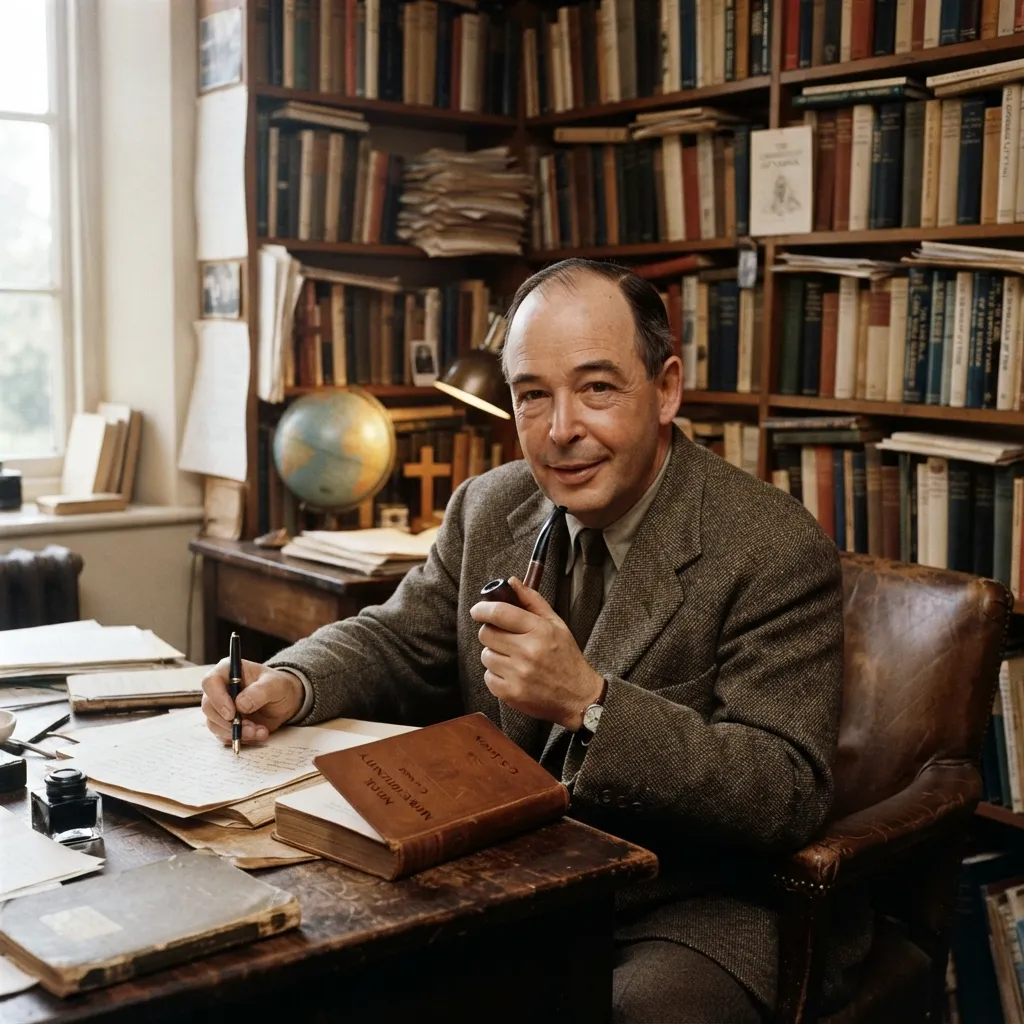
I am C.S. Lewis, a British writer, scholar, and Christian thinker best known for The Chronicles of Narnia and his influential works on Christian faith.
My writing continues to inspire readers around the world through timeless stories, faith, and thoughtful ideas.
For more author information and inspiring names, visit Elitenamez.com.