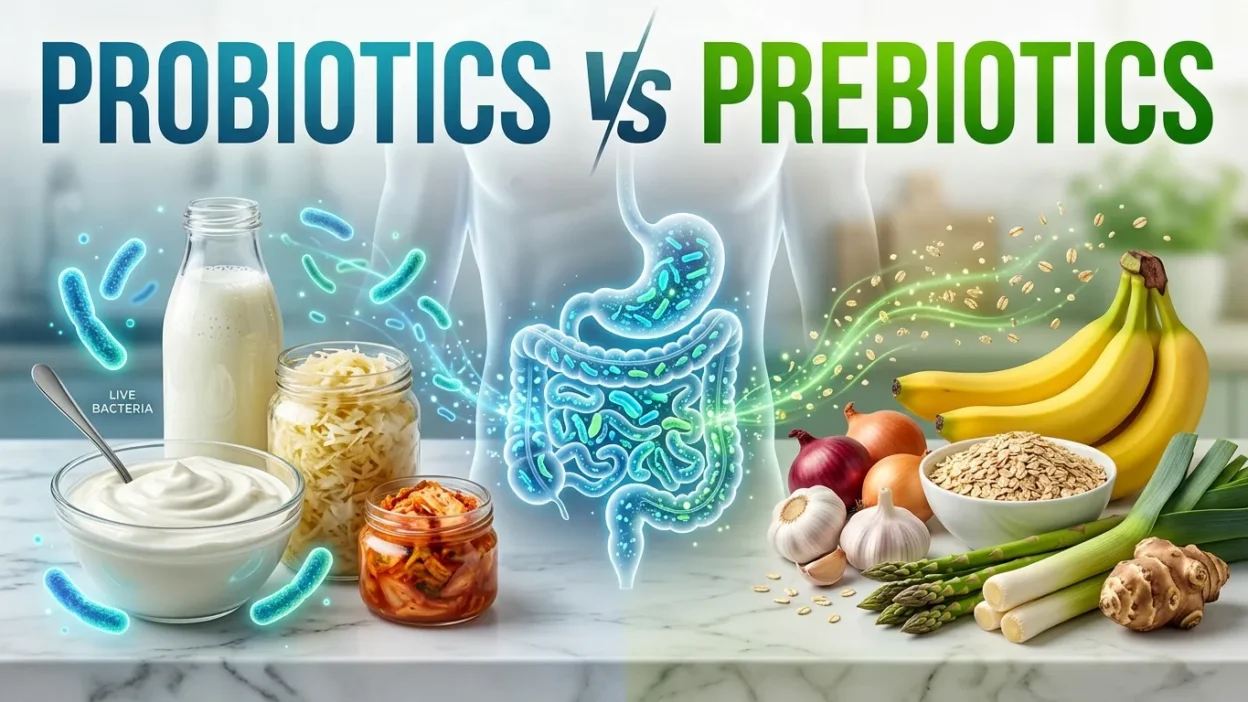
Probiotics are live microorganisms that may provide a health benefit when consumed in adequate amounts.
Prebiotics are nondigestible substances, often certain types of fiber, that are selectively used by gut microorganisms.
In simple terms, probiotics add beneficial microbes, while prebiotics help feed microbes already living in your gut.
Key Takeaways
- Probiotics are live microorganisms, including certain bacteria and yeasts.
- Prebiotics are nondigestible substances that selected gut microbes can use.
- You can get both from foods, although the sources are different.
- Neither one is automatically “better”; the right choice depends on your diet and reason for using it.
- Products that combine probiotics and prebiotics are called synbiotics, but combining them does not automatically guarantee better results.
Probiotics vs Prebiotics: The Main Difference
The names probiotics and prebiotics are easy to mix up. They sound almost identical, but they describe two different things.
The simplest way to remember the difference is this: probiotics are living microorganisms, while prebiotics are substances that certain microorganisms can use.
Your digestive tract contains a large community of microorganisms called the gut microbiota. Probiotics can introduce specific live microorganisms, while prebiotics can provide material that selected microbes use as a food source.
What Are Probiotics?
Probiotics are live microorganisms that provide a health benefit when consumed in adequate amounts. They can include bacteria and certain yeasts.
Some probiotics are found in foods, while others are sold as dietary supplements. Importantly, different probiotic strains can have different effects. A probiotic that has been studied for one purpose should not automatically be assumed to work for every other health concern.
Common probiotic organisms include certain strains of Lactobacillus, Bifidobacterium, and Saccharomyces.
What Are Prebiotics?
Prebiotics are nondigestible substances that are selectively used by microorganisms in ways that can benefit the host.
Many prebiotics are types of dietary fiber or carbohydrates. They pass through parts of the digestive system without being fully digested and can then be used by certain microorganisms in the colon.
Examples include inulin, fructooligosaccharides (FOS), and galactooligosaccharides (GOS).
One important detail is often missed: not every type of fiber is technically a prebiotic. The scientific definition is more specific than simply calling any fiber “food for good bacteria.”
Probiotics vs Prebiotics at a Glance
| Feature | Probiotics | Prebiotics |
|---|---|---|
| What are they? | Live microorganisms | Nondigestible substances used by certain microbes |
| Main role | Introduce specific live microbes | Support selected microbes already present |
| Common sources | Yogurt, kefir, some fermented foods | Fruits, vegetables, legumes, whole grains and certain fibers |
| Found in supplements? | Yes | Yes |
| Are they alive? | Yes | No |
| Can they be combined? | Yes | Yes |
| Combined product | Synbiotic | Synbiotic |
The key difference is therefore not simply “good bacteria versus fiber.” Probiotics are defined by the microorganism and demonstrated health benefit, while prebiotics are defined by how selected microorganisms use the substance and the associated health benefit.
What Do Probiotics Do?
Probiotics can interact with the existing microbial community in the digestive tract. Depending on the specific organism and health outcome being studied, probiotics may influence digestion, the intestinal environment, or immune responses.
However, it is important not to make broad claims about all probiotics.
Different strains can behave differently. The fact that one specific probiotic has evidence for a particular use does not mean every probiotic supplement will provide the same effect.
Probiotic Food Sources
You can find probiotics in some fermented foods and foods containing live cultures.
Examples include:
- Yogurt with live cultures
- Kefir
- Kimchi
- Sauerkraut
- Some fermented vegetables
- Certain fermented soy foods
The exact microorganisms present can vary depending on how a food is made, stored, and processed.
This is also why “fermented” does not automatically mean “probiotic.” A food can be fermented without meeting the scientific definition of a probiotic product.
Probiotic Supplements
Probiotic supplements are available as capsules, powders, tablets, liquids, and other products.
If you are considering one, look beyond the large number of CFUs printed on the front of the bottle. A higher number does not automatically mean a product is better.
Pay attention to the specific microorganism or strain, the amount provided, the intended use, storage instructions, and the evidence supporting that particular product.
For a specific medical condition, it is better to discuss probiotic selection with a healthcare professional rather than choosing a product based only on advertising.
What Do Prebiotics Do?
Prebiotics provide material that certain microorganisms can use.
When prebiotic substances reach the colon, gut microorganisms can metabolize them. This process can produce compounds such as short-chain fatty acids, which are involved in several functions within the gut.
Prebiotics can therefore support the microbial community already present rather than directly adding new microorganisms.
Prebiotic Food Sources
Many everyday plant foods contain fibers or other compounds that can support gut microorganisms.
Good examples include:
- Onions
- Garlic
- Leeks
- Asparagus
- Beans and lentils
- Oats
- Whole grains
- Bananas
- Certain vegetables
- Some resistant starches
Eating a variety of plant foods is a practical way to increase the range of fibers available to your gut microbes.
If you currently eat very little fiber, increase high-fiber foods gradually. A sudden large increase can cause temporary gas, bloating, or abdominal discomfort.
Prebiotic Supplements
Prebiotic supplements may contain ingredients such as inulin, FOS, or other specific fibers.
They can be useful in certain situations, but a supplement is not automatically better than food. For many people, a varied diet containing vegetables, fruits, legumes, whole grains, and other fiber-rich foods can provide a broad range of nutrients and fermentable carbohydrates.
Your individual tolerance also matters. Some people notice more gas or bloating after increasing certain prebiotic fibers.
Can You Take Probiotics and Prebiotics Together?
Yes. Probiotics and prebiotics can be used together.
The idea makes intuitive sense: probiotics provide selected live microorganisms, while prebiotics provide substances that certain microorganisms can use.
But that does not mean every combination will produce a stronger health effect.
What Are Synbiotics?
A product or intervention that combines a probiotic with a substrate that is selectively used by microorganisms is generally described as a synbiotic when the scientific criteria are met.
The word “synbiotic” should not be treated as a guarantee that a product is more effective.
As with probiotics and prebiotics individually, the specific organisms, ingredients, amounts, population, and health outcome matter.
Which Is Better: Probiotics or Prebiotics?
There is no universal winner.
If your diet is low in fiber, improving your overall intake of fiber-rich plant foods may be a sensible starting point. If you are considering a probiotic for a particular digestive problem, the evidence for the specific strain and condition matters more than the word “probiotic” on the bottle.
For many healthy adults, the practical approach is to build a varied diet first rather than immediately reaching for supplements.
Think of it this way:
Probiotic = the microorganism.
Prebiotic = a substance selected microorganisms can use.
They perform different jobs, so comparing them as if one must replace the other can be misleading.
Do You Need a Probiotic or Prebiotic Supplement?
Not necessarily.
Many people can get prebiotic substances from a varied diet and obtain probiotic microorganisms from selected fermented foods.
That does not mean supplements are never useful. Certain probiotic products have been studied for specific health situations, but benefits are not universal across all strains or products.
Before taking a supplement for a medical condition, ask a healthcare professional whether it makes sense for you.
This is particularly important if you have a weakened immune system, a serious underlying illness, or other medical concerns. Some people may face higher risks from certain probiotic products.
Possible Side Effects and Safety
Probiotic and prebiotic foods are generally tolerated by many healthy adults, but individual responses differ.
Increasing prebiotic fiber too quickly can lead to:
- Gas
- Bloating
- Changes in bowel movements
- Abdominal discomfort
Probiotic products can also cause digestive symptoms in some people.
More importantly, supplements are not interchangeable. A probiotic product should be evaluated based on its specific microorganism and evidence rather than simply its CFU count.
People with serious health conditions or weakened immune systems should speak with a healthcare professional before using probiotic supplements.
Frequently Asked Questions
Are probiotics better than prebiotics?
Neither is automatically better. Probiotics are live microorganisms, while prebiotics are substances used by selected microorganisms. Your dietary pattern and reason for considering a supplement should guide the choice.
What foods contain probiotics and prebiotics?
Probiotic foods can include yogurt with live cultures, kefir, kimchi, sauerkraut, and certain other fermented foods. Prebiotic sources include onions, garlic, asparagus, legumes, oats, whole grains, bananas, and other fiber-rich plant foods.
Can I take probiotics and prebiotics together?
Yes. They can be taken together, and products combining them may be called synbiotics. However, combining a probiotic and prebiotic does not automatically mean the product will work better. The specific ingredients and supporting evidence matter.
Should I take probiotics every day?
There is no universal daily probiotic requirement for every healthy person. Whether daily use is useful depends on the specific product, strain, reason for taking it, and available evidence. If you are considering a probiotic for a health condition, ask a healthcare professional for guidance.
Do prebiotics make you poop?
Some prebiotic fibers can affect bowel movements because they influence the contents and activity of the gut. However, the effect varies by type of fiber and by person. Increasing fiber gradually and drinking enough fluids can help reduce digestive discomfort.
What is the easiest way to remember the difference?
Remember the simple pairing: probiotics are live microorganisms; prebiotics are substances that selected microorganisms can use. Probiotics add specific microbes, while prebiotics support microbes already present in the gut.
Final Takeaway
The difference between probiotics vs prebiotics is easier to understand when you focus on their jobs.
Probiotics are specific live microorganisms that can provide health benefits when used appropriately. Prebiotics are nondigestible substances that selected microorganisms can use.
Rather than automatically choosing a supplement, start with a varied diet containing fiber-rich plant foods and appropriate fermented foods.
If you need a supplement for a specific health concern, focus on the evidence for that particular product instead of assuming all probiotics or prebiotics work the same way.

I am George R. R. Martin, an American author best known for A Song of Ice and Fire and its world of unforgettable characters.
I share my writing journey and literary insights with readers on Elitenamez.com.