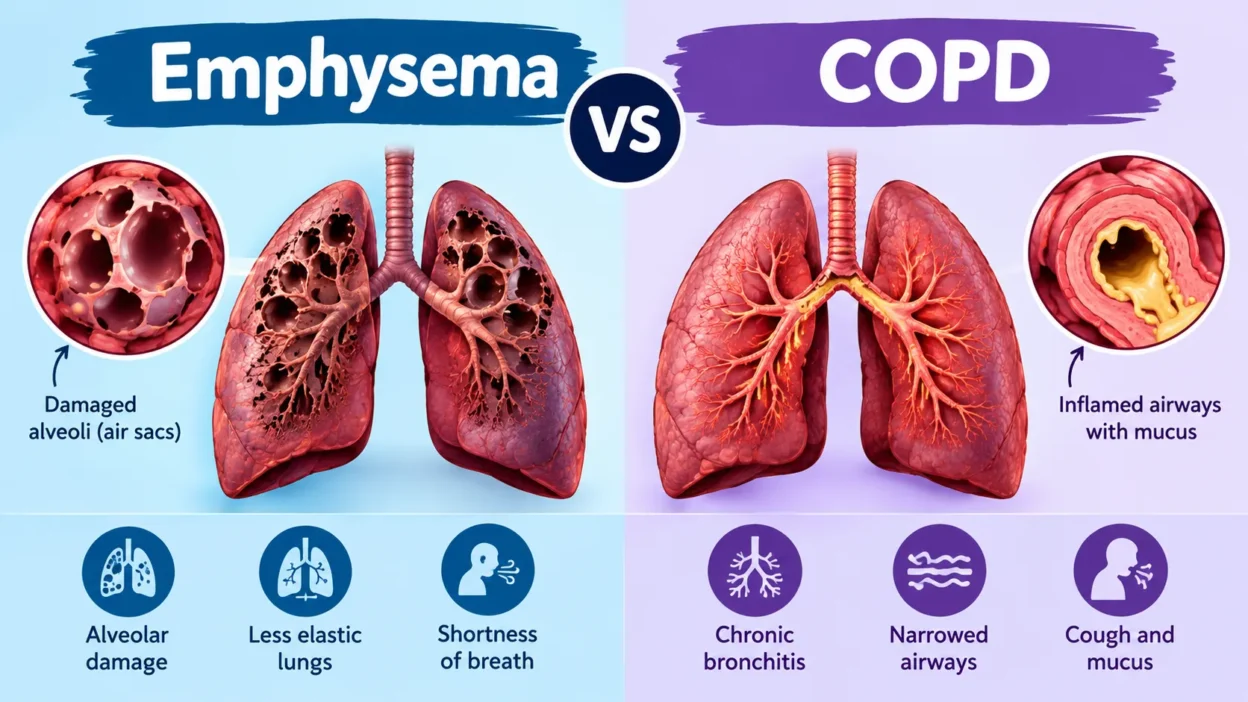
Emphysema is a type of chronic obstructive pulmonary disease (COPD), not a completely separate disease.
COPD is the broader condition involving persistent airflow limitation, while emphysema specifically describes damage to the lung’s air sacs, called alveoli.
A person can have COPD with emphysema, chronic bronchitis, or features of both.
Key Takeaways
- COPD is the broader diagnosis; emphysema is one form or component of COPD.
- Emphysema mainly damages the alveoli, while COPD can involve the airways, lung tissue, or both.
- Spirometry is central to confirming COPD-related airflow obstruction.
- CT imaging can show the location and extent of emphysema.
- Treatment overlaps, but the exact plan depends on symptoms, lung function, exacerbations, and other individual factors.
Is Emphysema the Same as COPD?
This is the most important point when comparing emphysema vs COPD: they are related, but the terms are not interchangeable.
COPD stands for chronic obstructive pulmonary disease. It is a chronic lung condition characterized by persistent respiratory symptoms and airflow limitation. Emphysema is a specific type of lung damage that can occur as part of COPD. Chronic bronchitis is another important component or pattern seen in COPD.
Think of COPD as the larger category. Emphysema describes one particular pattern of damage within that category.
COPD is the broader term
COPD can involve inflammation and narrowing of the airways, excess mucus, small-airway disease, destruction of lung tissue, or a combination of these problems.
This is why two people with COPD can have very different symptoms and test results.
Emphysema is more specific
Emphysema affects the tiny air sacs, or alveoli, where oxygen and carbon dioxide are exchanged. Damage to the walls of these air sacs can create larger abnormal air spaces and reduce the surface available for gas exchange. It can also contribute to air trapping and breathlessness.
Emphysema vs COPD: Key Differences
| Feature | COPD | Emphysema |
| What it is | A broad chronic lung disease | A specific type/pattern of lung damage |
| Main problem | Persistent airflow limitation | Damage to alveoli and loss of normal lung elasticity |
| Main areas affected | Airways and/or lung tissue | Mainly the air sacs |
| Common symptoms | Shortness of breath, cough, mucus, wheezing | Often prominent shortness of breath and reduced exercise tolerance |
| Main diagnostic test | Spirometry helps confirm airflow obstruction | CT can show emphysema; lung-function testing may also be used |
| Relationship | Broad category | Can occur as part of COPD |
| Treatment | Depends on symptoms and disease characteristics | Many treatments overlap with COPD care |
The key distinction is therefore scope. COPD describes the overall disease, while emphysema describes a particular type of structural damage.
Symptoms of Emphysema vs COPD
There is considerable overlap between the symptoms of emphysema and COPD.
Common COPD symptoms include:
- Shortness of breath
- Persistent cough
- Coughing up mucus or phlegm
- Wheezing
- Chest tightness
- Reduced ability to exercise
- Fatigue
The American Lung Association notes that COPD symptoms vary from person to person. Some people have significant mucus and coughing, while others mainly notice increasing breathlessness.
With emphysema, damage to the alveoli can make it harder to move air out of the lungs efficiently. Air may become trapped, leaving less room for fresh air. This can make shortness of breath especially noticeable during physical activity.
However, symptoms cannot reliably tell you whether emphysema is present. Persistent breathing symptoms can have many causes, so proper medical evaluation matters.
What Causes Emphysema and COPD?
Long-term exposure to lung irritants is an important cause of COPD. Cigarette smoke is the most common risk factor, but it is not the only one.
Other possible contributors include:
- Secondhand smoke
- Air pollution
- Dust and chemical fumes
- Certain occupational exposures
- Genetic conditions such as alpha-1 antitrypsin deficiency
The American Lung Association specifically recommends discussing smoking history, secondhand smoke, air pollution, workplace dust or fumes, and family history with a healthcare professional when COPD is suspected.
Alpha-1 antitrypsin deficiency is particularly important because it can contribute to emphysema and COPD, sometimes at a younger age. The American Lung Association states that people diagnosed with COPD should be tested for AAT deficiency.
How Are COPD and Emphysema Diagnosed?
Doctors do not diagnose COPD from symptoms alone.
Spirometry for COPD
Spirometry is a key test used to confirm persistent airflow obstruction. It measures how much air you can breathe out and how quickly you can exhale it.
The Global Initiative for Chronic Obstructive Lung Disease (GOLD) identifies spirometry as central to accurate COPD diagnosis.
A healthcare professional may also review your symptoms, smoking or exposure history, family history, physical examination, and previous respiratory problems.
CT scans and imaging for emphysema
A chest CT can provide more specific information about emphysema. It can show whether emphysema is present, where it occurs, and how extensive the structural changes are.
A regular chest X-ray may show some changes associated with COPD, but it cannot by itself confirm a COPD diagnosis. The American Lung Association notes that CT imaging may show the type of COPD, including emphysema, and provide information about its extent.
Other tests doctors may use
Depending on the situation, a clinician may also consider:
- Additional pulmonary function tests
- Oxygen measurements
- Blood tests
- Alpha-1 antitrypsin testing
- Exercise testing
- Chest X-ray or CT imaging
The appropriate combination depends on the person’s symptoms and medical history.
Are Emphysema and COPD Treated Differently?
Because emphysema is part of COPD, many treatments overlap.
Treatment may include inhaled medicines, pulmonary rehabilitation, vaccination and infection prevention, oxygen therapy for people who meet the appropriate criteria, and strategies to avoid further exposure to lung irritants. The specific plan is individualized.
Lifestyle and exposure changes
For someone who smokes, quitting is an important part of COPD care. Avoiding secondhand smoke, workplace irritants, and other harmful exposures can also help protect lung function.
Inhaled medicines
Doctors may prescribe inhaled medicines that help open the airways. Some people may also receive inhaled corticosteroids depending on their clinical characteristics and risk of exacerbations.
Current COPD treatment decisions are based on factors such as symptoms and exacerbation history rather than simply whether the word “emphysema” appears in a diagnosis. The 2026 GOLD report provides current evidence-based guidance for COPD management.
Pulmonary rehabilitation and oxygen
Pulmonary rehabilitation combines exercise, education, and strategies for managing breathing problems. Oxygen therapy may be prescribed for people with appropriately documented low oxygen levels.
Not everyone with COPD or emphysema needs oxygen, rehabilitation, or the same medications.
Can You Have COPD Without Emphysema?
Yes.
COPD does not automatically mean that a person has emphysema visible on imaging.
COPD can involve different combinations of airway disease, small-airway abnormalities, and lung-tissue destruction. Some people have prominent chronic bronchitis features, some have emphysema, and many have overlapping features.
This is why a COPD diagnosis alone does not tell the complete story about what is happening inside the lungs.
Is Emphysema Worse Than COPD?
This question is based on a common misunderstanding.
It is not medically useful to simply label COPD or emphysema as “worse,” because emphysema can be one component of COPD. The severity of a person’s condition depends on factors such as airflow limitation, symptoms, exacerbations, oxygen levels, imaging findings, and other health conditions.
Two people with the same broad COPD diagnosis may have very different disease patterns and treatment needs.
The better question is: How severe is the person’s lung disease, and what features are causing the most problems?
Frequently Asked Questions
Is emphysema the same thing as COPD?
No. Emphysema is a type or component of COPD. COPD is the broader chronic lung disease, while emphysema specifically refers to damage involving the lung’s air sacs. A person may have COPD with emphysema, chronic bronchitis, or a combination of different disease features.
Can COPD turn into emphysema?
COPD and emphysema are not simply two stages where one automatically “turns into” the other. Emphysema can be one of the structural patterns present in COPD. Imaging and lung-function testing can help doctors determine which features are present.
Can emphysema be cured?
There is currently no cure that reverses established emphysema-related destruction of lung tissue. However, treatment can help manage symptoms, improve daily function, reduce exacerbations, and address factors that may contribute to further lung damage.
What test shows emphysema?
A chest CT scan can show emphysema and help determine its location and extent. Spirometry is important for assessing airflow obstruction and confirming COPD, but it does not by itself provide the same structural information as CT imaging.
Can you have both emphysema and chronic bronchitis?
Yes. COPD can include both emphysema and chronic bronchitis features. The two processes affect different parts of the respiratory system but can occur together in the same person.
If breathing difficulty is new, persistent, or getting worse, a healthcare professional can determine whether COPD, emphysema, asthma, heart disease, or another condition is responsible. Severe difficulty breathing, blue lips or fingernails, confusion, or other sudden serious symptoms require urgent medical attention.
Conclusion:
The simplest way to remember emphysema vs COPD is this: COPD is the broader disease, while emphysema is one type of lung damage that can occur within COPD.
COPD may involve the airways, alveoli, or both. Emphysema specifically damages the alveoli and can contribute to air trapping and shortness of breath.
Diagnosis usually combines symptoms and medical history with lung-function testing, while CT imaging can help identify emphysema.
Treatment is individualized and may include inhalers, pulmonary rehabilitation, exposure reduction, and other therapies recommended by a healthcare professional.
This article is for general educational purposes and does not replace an evaluation by a qualified healthcare professional.

I am Paulo Coelho, a Brazilian author best known for inspiring readers through stories about dreams, faith, and personal journeys.
I share my writing experience and insights on Elitenamez.com to help readers discover meaningful ideas and stories.