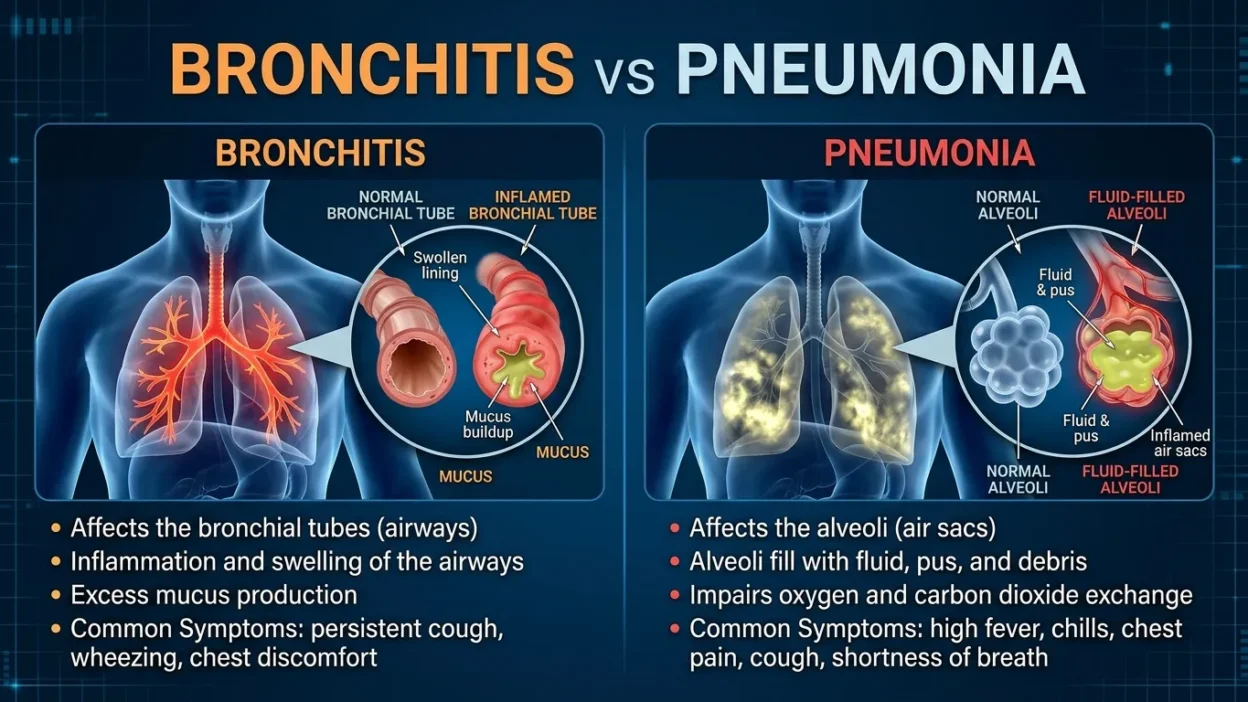
Pneumonia and bronchitis are respiratory conditions that affect different parts of the lungs. Bronchitis causes inflammation in the bronchial tubes, which carry air into the lungs.
Pneumonia affects the tiny air sacs in the lungs, where oxygen enters the bloodstream.
Both can cause coughing, fatigue, and breathing problems, but pneumonia can be more serious and may require urgent medical treatment.
Key Takeaways
- Bronchitis affects the airways, while pneumonia affects the air sacs in the lungs.
- Both conditions can cause coughing, mucus, tiredness, and shortness of breath.
- Pneumonia may cause more pronounced fever, chills, chest pain, and breathing difficulties, but symptoms vary.
- Acute bronchitis is usually caused by a virus, while pneumonia can result from bacteria, viruses, or fungi.
- Severe breathing difficulties, blue or gray lips, or new confusion require emergency medical attention.
What Is the Difference Between Pneumonia and Bronchitis?
The main difference between pneumonia and bronchitis is the part of the respiratory system affected.
Bronchitis occurs when the bronchial tubes become inflamed and produce extra mucus. Pneumonia develops when infection causes inflammation in the lung tissue and tiny air sacs, sometimes filling them with fluid or pus. This can make breathing difficult and reduce the body’s ability to get enough oxygen.
| Feature | Bronchitis | Pneumonia |
|---|---|---|
| Main area affected | Bronchial tubes | Air sacs and lung tissue |
| Common causes | Usually viruses in acute bronchitis | Bacteria, viruses, or fungi |
| Main symptom | Persistent cough | Cough, often with other signs of lung infection |
| Fever | Often absent or mild | May be higher, but can be absent |
| Chest discomfort | May occur from coughing | May worsen with deep breaths or coughing |
| Breathing problems | Sometimes | Can be more significant |
| Typical treatment | Supportive care for acute cases | Depends on the cause and severity |
| Potential severity | Usually mild in otherwise healthy people with acute bronchitis | Ranges from mild to life-threatening |
These are general patterns, not rules. Symptoms alone cannot reliably distinguish the two conditions.
What Is Bronchitis?
Bronchitis is inflammation of the bronchial tubes, the air passages that carry air toward your lungs. When these tubes become irritated or inflamed, they may produce extra mucus, triggering a persistent cough.
There are two main types:
- Acute bronchitis: Often called a chest cold, it usually follows a viral respiratory infection and improves within a few weeks.
- Chronic bronchitis: A long-term condition associated with chronic obstructive pulmonary disease (COPD). It involves a productive cough lasting at least three months per year for two consecutive years, after other causes are considered.
Acute bronchitis is usually manageable at home when symptoms are mild. Chronic bronchitis, however, may require ongoing medical care.
What Is Pneumonia?
Pneumonia is an infection that inflames the lung tissue and air sacs called alveoli. These sacs help transfer oxygen into the bloodstream. When they fill with fluid or pus, breathing may become harder.
Pneumonia can be caused by bacteria, viruses, or fungi. Its severity depends on the cause, a person’s age, overall health, and other risk factors.
Some people develop mild symptoms known as walking pneumonia, while others may need hospital treatment, oxygen, or other forms of respiratory support. Mild symptoms do not necessarily rule out pneumonia.
Pneumonia vs Bronchitis Symptoms
Because these conditions share several symptoms, it can be difficult to tell them apart without a medical evaluation.
Common Symptoms of Bronchitis
Acute bronchitis often causes symptoms similar to a cold or another respiratory infection, including:
- Persistent coughing, with or without mucus
- Sore throat
- Runny or stuffy nose
- Mild body aches
- Fatigue
- Wheezing or chest tightness
- Sometimes a mild fever
The cough may continue after other symptoms improve because the airways can remain irritated. A cough lasting several weeks does not automatically mean you have pneumonia, but a persistent or worsening cough deserves attention.
Common Symptoms of Pneumonia
Pneumonia can cause many of the same symptoms, but it may also produce more pronounced signs of illness, such as:
- Fever and shaking chills
- Shortness of breath or rapid breathing
- Chest pain when coughing or taking a deep breath
- Significant tiredness or weakness
- Sweating
- Cough with mucus
- Loss of appetite
- Confusion, particularly in older adults
Not everyone with pneumonia develops a high fever or produces mucus. Older adults and people with weakened immune systems may have less obvious symptoms.
How Can You Tell Which Condition You Have?
Pay attention to how you feel, whether your symptoms are worsening, and whether you have difficulty breathing. These clues can help you decide when to seek care, but they cannot provide a definite diagnosis.
For example, a person with a nagging cough, mild congestion, and no major breathing difficulties may have acute bronchitis. Someone with fever, chills, pain during deep breathing, and worsening shortness of breath may have pneumonia.
However, bronchitis can also cause breathing discomfort, and pneumonia can begin with mild, cold-like symptoms.
Do not rely on mucus color to determine whether you have pneumonia or need antibiotics. Yellow or green mucus does not, by itself, prove that an infection is bacterial.
If you suspect pneumonia, symptoms are getting worse, or you have risk factors for severe illness, contact a healthcare professional rather than trying to diagnose yourself.
Causes and Risk Factors
Acute bronchitis is usually caused by viruses, including viruses associated with the common cold, influenza, and other respiratory infections. Smoke, dust, and other irritants can also inflame the airways.
Pneumonia has a wider range of infectious causes, including bacteria, viruses, and fungi. Sometimes it develops during or after another respiratory illness.
Both conditions can affect anyone, but pneumonia may be more dangerous for:
- Adults aged 65 and older
- Young children
- People with chronic heart or lung conditions
- People with weakened immune systems
- People with certain other underlying health conditions
Smoking and exposure to respiratory infections can also increase respiratory health risks. Recommended vaccinations and everyday infection-prevention measures can help reduce the risk of some infections.
Diagnosis: How Doctors Tell Them Apart
A healthcare professional will consider your symptoms, medical history, breathing, and physical examination findings. Because bronchitis and pneumonia can look similar, additional testing may be needed.
Common diagnostic methods include:
- Listening to your lungs: A clinician uses a stethoscope to check for abnormal breathing sounds.
- Chest X-ray: This may help identify signs of pneumonia when it is suspected.
- Pulse oximetry: A small sensor measures oxygen saturation in your blood.
- Blood or mucus tests: These may help identify an infection or assess its severity when appropriate.
Not everyone with bronchitis needs an X-ray or laboratory tests. Testing depends on the symptoms and the clinician’s assessment.
Pneumonia vs Bronchitis Treatment
Treatment depends on the diagnosis, the underlying cause, and how seriously the illness affects your breathing.
How Is Bronchitis Treated?
Most cases of acute bronchitis improve without prescription medication. Supportive care may include:
- Getting enough rest.
- Drinking fluids to stay hydrated.
- Using a clean humidifier to ease irritation.
- Avoiding cigarette smoke and other airway irritants.
- Asking a pharmacist or healthcare professional about appropriate symptom relief.
Antibiotics generally do not help acute bronchitis because viruses cause most cases. Unnecessary antibiotics can cause side effects and contribute to antibiotic resistance.
Chronic bronchitis requires a different approach. A healthcare professional may recommend inhaled medications, smoking cessation, pulmonary rehabilitation, or other treatments based on the person’s condition.
How Is Pneumonia Treated?
Pneumonia treatment depends on its cause and severity.
- Bacterial pneumonia: Healthcare professionals commonly treat it with antibiotics.
- Viral pneumonia: Treatment may include supportive care and, for certain viruses such as influenza, prescription antiviral medication when appropriate.
- Fungal pneumonia: Antifungal medication may be necessary.
- Severe pneumonia: Hospital care, oxygen, intravenous medication, or additional respiratory support may be required.
Antibiotics do not treat viral infections. Do not take leftover antibiotics or start prescription treatment without medical guidance.
How Long Do Pneumonia and Bronchitis Last?
Recovery time varies depending on the infection, symptom severity, age, and overall health.
| Condition | General recovery pattern |
|---|---|
| Acute bronchitis | Often improves within a few weeks; coughing may last up to three weeks or longer. |
| Mild pneumonia | May begin improving within days of appropriate treatment, but full recovery can take weeks. |
| Severe pneumonia | May require hospitalization and several weeks or longer to recover. |
| Chronic bronchitis | A long-term condition that requires ongoing management. |
These time frames are general guides, not guarantees. Fatigue and coughing can persist after an infection begins to resolve.
If your symptoms worsen, breathing becomes difficult, or you are not improving as expected, seek medical advice. Do not wait for a typical recovery period to end if you develop concerning symptoms.
When to Seek Medical Care
Knowing when to get help is one of the most important parts of understanding pneumonia vs bronchitis.
Seek emergency medical care immediately if you experience:
- Severe difficulty breathing or gasping for air
- Blue or gray lips or skin
- New confusion, fainting, or difficulty staying awake
- Persistent or severe chest pain or pressure
Contact a healthcare professional promptly for worsening shortness of breath, bloody mucus, persistent fever, or symptoms that are not improving. People aged 65 and older, young children, pregnant people, and those with weakened immune systems or chronic health conditions may need earlier evaluation.
For infants younger than three months, a temperature of 100.4°F (38°C) or higher requires prompt medical attention.
FAQs:
1. Is pneumonia worse than bronchitis?
Pneumonia can be more serious because it affects the air sacs responsible for oxygen exchange. Severe cases may require hospitalization. Acute bronchitis is usually milder and often improves on its own. However, pneumonia ranges from mild to severe, and individual risk depends on age, underlying conditions, and the cause of infection.
2. Can bronchitis turn into pneumonia?
Bronchitis does not automatically develop into pneumonia. The two conditions affect different parts of the respiratory system, and they can sometimes occur during the same illness. If your cough worsens, you develop a persistent fever, or you experience increasing breathing difficulties, seek medical evaluation to check for pneumonia or another complication.
3. Can you have pneumonia without a fever?
Yes. Pneumonia does not always cause a fever. Older adults and people with weakened immune systems may have less noticeable symptoms. A persistent cough, unusual weakness, confusion, chest pain, or shortness of breath can still indicate a serious illness. Do not rule out pneumonia simply because your temperature is normal.
4. Do antibiotics work for both pneumonia and bronchitis?
Antibiotics can treat bacterial pneumonia, but they do not treat viral pneumonia. Most acute bronchitis is viral, so antibiotics are generally not recommended. A healthcare professional can determine whether antibiotics are appropriate based on your symptoms, examination, and any necessary tests. Taking antibiotics when they are not needed can cause harm.
5. What does a pneumonia cough sound like compared with bronchitis?
There is no single cough sound that reliably distinguishes pneumonia from bronchitis. Both can cause dry or mucus-producing coughs. Pneumonia may also cause fever, chest pain, or shortness of breath, but these symptoms are not present in every case. A medical examination is more reliable than judging the sound of your cough.
Conclusion:
Understanding pneumonia vs bronchitis starts with knowing where each condition affects the respiratory system. Bronchitis inflames the airways and commonly causes a persistent cough, while pneumonia affects the lung tissue and air sacs and can interfere with oxygen exchange.
Although bronchitis is often milder, symptoms overlap, so you cannot confidently distinguish these conditions by cough or mucus color alone. Seek medical advice if symptoms worsen or you suspect pneumonia, and get emergency care for severe breathing problems or other serious warning signs.
This article provides general educational information and does not replace professional medical advice, diagnosis, or treatment.

I am George R. R. Martin, an American author best known for A Song of Ice and Fire and its world of unforgettable characters.
I share my writing journey and literary insights with readers on Elitenamez.com.