Polyester vs cotton comes down to comfort, durability, and how you plan to use the fabric.
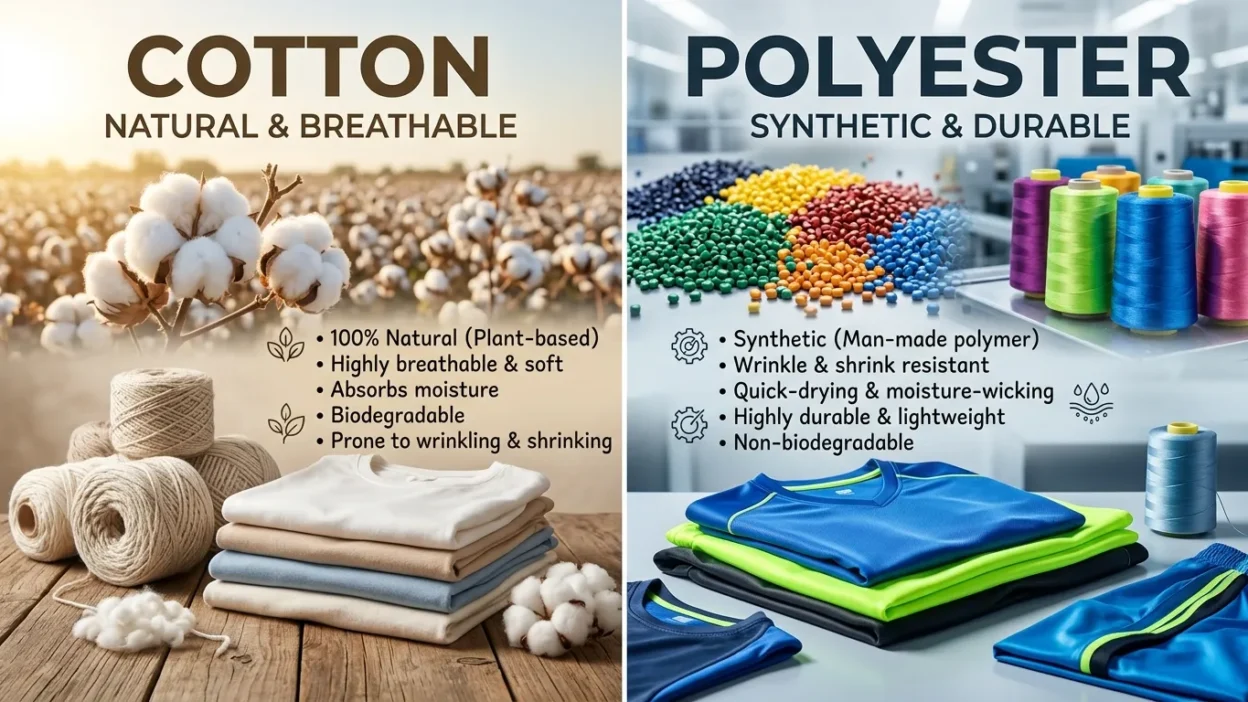
Cotton is a natural fiber that feels soft, absorbs moisture, and works well for everyday clothing and bedding.
Polyester is a synthetic fiber that dries quickly, resists wrinkles, and suits activewear. The best choice depends on your needs and preferences.
Key Takeaways
- Cotton is a great choice for everyday comfort, breathability, and absorbency.
- Polyester is useful for sportswear, travel clothing, and garments that need to dry quickly.
- Cotton can shrink and wrinkle, while polyester generally holds its shape and resists creases.
- Cotton and polyester blends combine some benefits of both materials.
- Neither fabric is automatically more sustainable; production methods, garment lifespan, and care matter.
What Is the Difference Between Polyester and Cotton?
The main difference between polyester and cotton is their origin and how they handle moisture.
Cotton comes from the cotton plant, making it a natural fiber. Polyester is a manufactured synthetic fiber commonly made from polyethylene terephthalate (PET). These different structures affect how the fabrics feel, dry, and perform during everyday use.
What Is Cotton?
Cotton is a plant-based fiber widely used to make T-shirts, jeans, underwear, towels, and bed sheets. It is popular because it feels comfortable against the skin and absorbs moisture.
Cotton fabrics can feel cool and soft, especially when they are lightweight and loosely woven. However, cotton can hold moisture after heavy sweating, take longer to dry, and wrinkle during washing.
What Is Polyester?
Polyester is a synthetic fiber used in sportswear, jackets, uniforms, blankets, and many everyday garments.
It absorbs relatively little water into the fiber itself, so it often dries faster than cotton. It also resists wrinkles and shrinkage under normal care conditions.
However, polyester can feel less comfortable in hot, humid conditions when the fabric traps heat or lacks good airflow. Its performance depends on the weave, knit, thickness, and any moisture-management treatments.
Polyester vs Cotton: Quick Comparison
| Feature | Cotton | Polyester |
|---|---|---|
| Fiber type | Natural | Synthetic |
| Feel | Soft and natural | Smooth; varies by finish |
| Breathability | Often very good | Depends on construction |
| Moisture | Absorbs water | Absorbs little water |
| Drying time | Usually slower | Usually faster |
| Wrinkles | More likely | More resistant |
| Shrinkage | Possible, especially with heat | Generally less likely |
| Durability | Good with proper care | Often strong and abrasion-resistant |
| Maintenance | May need ironing | Usually easy to maintain |
| Common uses | T-shirts, towels, bedding | Sportswear, uniforms, jackets |
These are general tendencies. Fabric construction and quality can change how a finished garment performs.
Comfort and Breathability
Comfort is one of the biggest reasons people compare cotton vs polyester.
Cotton is often preferred for everyday clothing because it feels soft and absorbs moisture. Lightweight cotton garments can also allow good airflow, making them comfortable for casual wear.
Polyester can feel smooth and lightweight, but some garments may feel warmer or less comfortable when airflow is limited. Modern polyester sportswear can perform well, though, because manufacturers can design the fabric to move sweat away from the body.
Which is better for hot weather?
For ordinary summer clothing, lightweight cotton is often a comfortable option. For running or intense exercise, moisture-wicking polyester may be better because it dries faster.
Remember that fiber content is only one factor. A thick cotton sweatshirt can feel much warmer than a thin polyester shirt. Fit, fabric weight, and construction also affect comfort.
Moisture Absorption and Drying Time
Cotton and polyester handle sweat differently.
Cotton absorbs water into its fibers. This can help it feel comfortable during normal daily activities, but a heavily soaked cotton shirt may become damp and heavy. It can take longer to dry after exercise or washing.
Polyester absorbs much less water into the fiber itself. Moisture-wicking polyester fabrics can move sweat across the fabric surface, where it can evaporate more quickly.
However, not every polyester garment is moisture-wicking. The yarn structure, fabric design, and finish influence how effectively sweat moves through the material.
Choose cotton for everyday comfort and absorbency. Choose performance polyester for workouts, running, cycling, and activities where quick drying matters.
Durability and Maintenance
Both fabrics can last a long time, but their strengths are different.
Polyester generally resists wrinkles, shrinking, and stretching better than cotton. It is useful for uniforms, travel clothing, and garments that need to maintain their shape through frequent washing.
Cotton is also durable, especially when made well, but repeated washing and high dryer temperatures can cause shrinkage, fading, or fabric wear. Some cotton garments also need ironing to look neat.
Which Fabric Is Easier to Wash?
Polyester usually requires less ironing and dries quickly. Cotton is also easy to wash, but you may need to pay more attention to water temperature and drying settings.
For both materials, follow the garment’s care label. Use lower heat when recommended, avoid excessive drying, and separate items according to their washing instructions.
One additional difference is odor. Some polyester garments can retain body odors, particularly after sweaty workouts. Washing them promptly with a suitable detergent can help. Cotton often releases odors more readily during washing, although results depend on the garment and laundry routine.
Price and Affordability
Polyester is often an affordable option because it can be manufactured efficiently and used in large quantities. It is common in budget clothing, sportswear, uniforms, and home textiles.
Cotton prices vary according to fiber quality, fabric construction, brand, and whether the material is organic or specially processed. Basic cotton garments can be inexpensive, while premium cotton products can cost considerably more.
The initial price does not tell you everything about value. A garment that lasts longer and meets your needs may offer better value over time, even if it costs more upfront.
When shopping, compare fabric quality, stitching, fit, care requirements, and expected use rather than choosing based on fiber content alone.
Environmental Impact
Neither cotton nor polyester is automatically the better environmental choice.
Cotton is plant-based and can biodegrade under suitable conditions. However, conventional cotton production can require substantial water, land, and agricultural inputs. Its environmental impact varies with farming practices, local conditions, and processing.
Polyester is generally made from fossil-based raw materials and does not readily biodegrade. Washing synthetic clothing can also release tiny plastic fibers into wastewater. Recycled polyester can reduce the need for virgin raw materials, but it does not eliminate every environmental concern.
A useful way to make a more responsible choice is to buy durable clothing, wash it thoughtfully, repair it when possible, and use it for as long as it remains practical.
Polyester vs Cotton: Which Is Better for Different Uses?
The right fabric depends on what you are buying.
T-Shirts and Everyday Clothing
Cotton is often a good choice for everyday T-shirts because it feels soft and absorbs moisture. It works well for casual wear, relaxing at home, and many daily activities.
Polyester shirts can be useful when you want lightweight clothing that dries quickly and resists wrinkles. They are also common in uniforms and printed promotional clothing.
For everyday versatility, a cotton-polyester blend may offer a useful balance.
Sportswear and Workouts
Polyester is often the better option for running shirts, gym tops, cycling clothing, and other performance garments.
Its quick-drying properties can help keep clothing from becoming heavy with sweat. Cotton can work for light exercise, but a soaked cotton shirt may cling to the body and stay wet longer.
Look for breathable, moisture-wicking construction rather than relying on the word “polyester” alone.
Bedding and Sleepwear
Cotton is a popular choice for bed sheets, pillowcases, and sleepwear because of its soft feel and moisture absorption. Lightweight cotton percale, for example, can be a comfortable option for people who prefer a crisp, breathable sheet.
Polyester bedding is often affordable, wrinkle-resistant, and easy to maintain. However, some people may find it warmer than lightweight cotton.
Your sleeping temperature, local climate, weave, and fabric weight all matter when choosing bedding.
Is a Cotton-Polyester Blend a Good Choice?
Yes. A cotton-polyester blend can be a practical option when you want a combination of comfort and easy care.
For example, a shirt made from 60% cotton and 40% polyester contains more cotton for a familiar soft feel while gaining some of polyester’s wrinkle resistance and dimensional stability.
A blend can offer several advantages:
- Less shrinkage than some all-cotton garments.
- Better wrinkle resistance than many cotton-only fabrics.
- Faster drying than comparable cotton fabrics.
- A balance between comfort and durability.
The exact result depends on the blend ratio and fabric construction. A 50/50 blend will not necessarily feel or perform like a 65/35 blend.
For uniforms and everyday shirts, blends can be especially useful. For bedding or clothing where natural-fiber feel is your priority, 100% cotton may be preferable.
Frequently Asked Questions
Is cotton better than polyester?
Cotton is often better for everyday comfort, absorbency, and a natural feel. Polyester is usually better for quick drying, wrinkle resistance, and many types of activewear. Neither is universally superior, so consider the activity, climate, fabric construction, and care requirements before deciding.
Which is more breathable, cotton or polyester?
Cotton is often comfortable and breathable in everyday clothing, especially when the fabric is lightweight and loosely woven. Polyester can also be breathable when specially engineered for airflow. The finished fabric’s structure and thickness matter as much as its fiber content.
Is polyester hotter than cotton?
Some polyester garments feel warmer because they limit airflow or trap heat. Lightweight, moisture-wicking polyester can perform well during exercise, though. For casual summer wear, lightweight cotton is often a comfortable choice, but the fit and weave also affect how cool a garment feels.
Which fabric lasts longer?
Polyester often resists abrasion, wrinkles, and shrinkage well, making it suitable for garments that receive frequent use. Cotton can also last for years when it is well made and cared for properly. Stitching, fabric weight, washing habits, and garment quality all influence lifespan.
Is polyester or cotton better for sensitive skin?
Many people find soft cotton comfortable against sensitive skin, but no fabric is guaranteed to suit everyone. Dyes, finishing chemicals, rough seams, detergents, and tight clothing can contribute to irritation. Choose a comfortable fabric, wash new garments before wearing them, and seek medical advice for persistent skin reactions.
Conclusion
When comparing polyester vs cotton, the best choice depends on how you plan to use the fabric.
Cotton is a strong option for everyday clothing, comfortable T-shirts, towels, and bedding. Polyester is useful for sportswear, travel clothing, and garments that need to dry quickly and resist wrinkles. Cotton-polyester blends can provide a practical middle ground.
Before buying, consider comfort, climate, durability, maintenance, and environmental impact. Choosing the right fabric for its intended purpose will usually matter more than declaring one material the winner in every situation.

I am Paulo Coelho, a Brazilian author best known for inspiring readers through stories about dreams, faith, and personal journeys.
I share my writing experience and insights on Elitenamez.com to help readers discover meaningful ideas and stories.